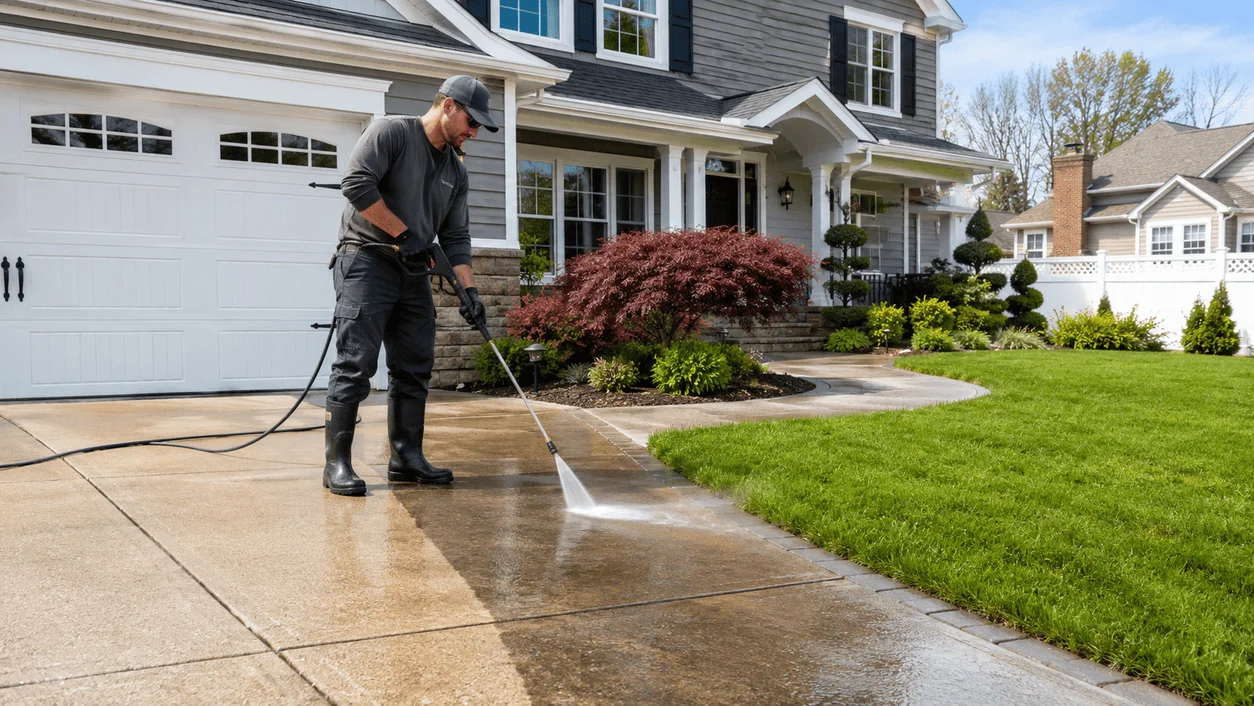
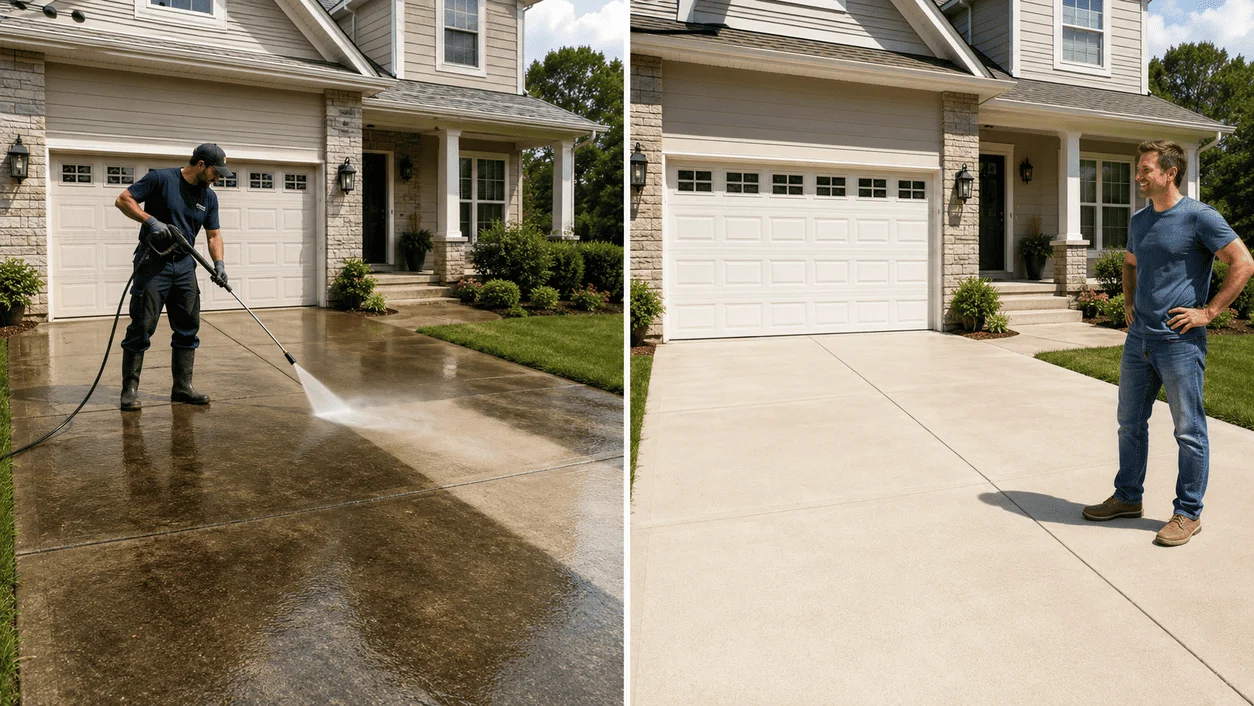
Your driveway is the biggest surface on your property and the first thing every visitor drives over. Popeye’s Power Washing lifts out the oil, rust, tire marks, and gray grime with hot and cold water and a rotary surface cleaner, so concrete, asphalt, pavers, and Belgian block dry to one clean, even shade. No stripes, no spread-around stains.
Most oil stains come out or fade dramatically when the process is right: a degreaser breaks the bond first, then heated high-pressure water flushes the oil out of the concrete’s pores. That heat is the difference. Cold water alone pushes oil around the slab and leaves the shadow you have probably seen on rushed jobs. Stains that have soaked in for years may leave a faint ghost even after treatment, and we will tell you exactly what to expect during your free estimate, before a single nozzle is pulled.
Know Your Enemy
Every stain has a different chemistry, and pressure alone only fixes one of them. Here is what is actually on your driveway and how each one comes out.
Motor oil, power steering drips, and grill grease bond into the pores. Degreaser plus heat releases them; cold water just relocates them.
Irrigation iron, fertilizer granules, and metal furniture leave orange spots that ignore pressure completely. They need a dedicated rust remover, applied and rinsed.
The overall dinginess is organic growth plus traffic film. Detergent dwell and an even surface-cleaner pass restore the original color.
Hot tires leave plasticizer streaks in the driveway; gum welds itself to concrete. Both release under heated water that cold machines cannot match.
Every Driveway Type
Long Island driveways come in four flavors, and they do not get cleaned the same way.
Takes the most pressure and shows stains the most. Surface-cleaned for an even finish, with stain pre-treatment for oil and rust, and an optional sealer to keep it brighter longer.
Softer than it looks, especially in July. We drop the pressure, widen the fan, and clear the growth and grime without scarring the binder or scattering aggregate.
Cleaned with controlled pressure that respects the joint sand, then re-sanded and sealed if you want the full restoration. See our brick paver page for the complete process.
The granite curbing and aprons on many Long Island driveways collect the same grime as the field. We clean block and mortar lines without loosening joints.
Why Pro Finish Differs
If you have seen a driveway with light and dark zebra stripes after washing, this is why.
Spinning nozzles ride at a fixed height inside a hooded deck, covering wide, consistent passes. Every square foot gets identical pressure and dwell.
Result: the driveway dries to one even shade, edge to edge.
Every stroke lands at a slightly different distance and angle. Some strips get over-cleaned, some barely touched, and etched lines can be permanent on soft concrete.
Result: stripes that show up as the slab dries and stay until the next wash.
Spring Is The Moment
Long Island winters end with a driveway full of things you cannot see. Road salt and de-icer residue keep pulling moisture into the surface and accelerate the flaking called spalling. Chlorides tracked off the street feed the white crust that blooms in April. And months of wet leaves compressed under snow leave tannin shadows along the edges where the piles sat.
A spring wash flushes the salts out of the pores before summer heat bakes them in, clears the organic film before it becomes algae season’s head start, and shows you the true condition of the slab while there is a full season ahead to seal or repair it. One wash a year is the sweet spot for most homes; make it spring.
The Payoff
A driveway is often 600 to 1,200 square feet of the first impression, more visible from the street than most of your siding. When it goes from gray and spotted to uniformly clean, the whole property reads newer, and buyers, appraisers, and neighbors notice before they ever reach the front door.
It is also protective, not just cosmetic. Algae film is a slip hazard on a sloped driveway, oil degrades asphalt binder over time, and salt left in the pores shortens a slab’s life. An annual wash costs a fraction of a resurfacing job and pushes that expense years further away.
Good To Know
“Fantastic job on our driveway. All the old oil stains are finally gone and it dried one even color, no streaks anywhere. Highly recommend.”
Answers
Most oil stains come out or fade dramatically with the right process: a degreaser to break the bond, then heated high-pressure water to flush the oil out of the pores. Cold water alone just spreads it around. Old stains that have soaked deep for years may leave a light shadow, and we will tell you honestly what to expect before we start.
On Long Island the usual culprits are irrigation water with high iron content, lawn fertilizer granules, and metal furniture or planters. Rust does not respond to pressure alone. It needs a dedicated rust remover applied and rinsed, which is part of our stain treatment.
Not when the pressure matches the surface. Sound concrete handles high pressure well. We use a rotary surface cleaner for an even finish and avoid tight wand passes that etch lines into the slab. Crumbling or spalling concrete is washed at reduced pressure.
Those zebra stripes come from cleaning with a handheld wand, where every pass lands at a slightly different distance and angle. A rotary surface cleaner keeps the nozzles at a fixed height and spin speed, which is why professional jobs dry to one even shade.
Most Long Island driveways take about one to two hours including stain pre-treatment and rinse. Larger driveways or heavy oil and rust treatment can run longer.
Yes, with adjusted technique. Asphalt is softer than concrete, especially in summer heat, so it gets lower pressure and a wider fan. We remove growth and surface grime without scarring the binder.
Wait at least 28 days so the slab reaches full cure strength. Washing green concrete can open the surface and leave it more porous for life.
Yes. Salt residue accelerates surface scaling and feeds the white crust you see in spring. A spring wash flushes chlorides out of the surface, one of the best things you can do for a Long Island driveway after a snowy winter.
Once a year is the sweet spot for most Long Island homes, ideally in spring. Shaded driveways that grow algae, or households with cars that drip, may benefit from twice a year.
It depends on square footage, material, and how much stain treatment is needed. Every estimate is free and no-obligation. Call (631) 620-2499 for an honest number, and bundling with a house wash saves money since the crew is already on site.
Where We Work
Based in Holbrook and serving homeowners throughout Suffolk & Nassau:
Call Us For a Free Appointment Today and Receive Your 20% Discount on All Services
Free, no-obligation estimate. Open Mon-Sun, 10am-7pm.
Call Now & Save 20% (631) 620-2499