Your home deserves a fresh start!
Brick Patio Pavers Pressure Washing in Long Island, NY
You didn’t put in a Cambridge patio to watch it fade. Popeye’s Power Washing pressure washes brick paver patios, walkways, driveways, and pool decks across Suffolk & Nassau, then re-sands the joints with polymeric sand and seals the surface so the color comes back and stays.
Can You Pressure Wash Brick Patio Pavers?
Yes, when it is done with the right equipment. We clean pavers with a rotary surface cleaner and controlled pressure, backed by hot and cold water, so embedded grime, mold, and stains lift out evenly without blasting the sand from the joints or scarring the surface the way a handheld wand on high pressure does. Washing is also only step one: a proper job re-sands the joints with polymeric sand and seals the surface, which locks the field together, deepens the color, and blocks new stains. On Long Island the full treatment keeps a patio looking new for 3 to 5 years.
Worth Protecting
You Paid Real Money For That Patio
A Cambridge paver patio is not a slab of concrete – it is a five-figure investment in how your home lives and looks. And it is also the one surface most homeowners quietly watch deteriorate: the reds and charcoals go chalky, the joint lines empty out, weeds find the gaps, and the pool deck that sold you on the house starts looking like it belongs to the previous owner.
Restoration is not a rinse. It is the difference between a patio that looks powerwashed and a patio that looks new. That is why we treat paver work as a three-stage process – clean, re-sand, seal – and why we will tell you honestly if your pavers only need a cleaning this year, not the full package. The goal is a patio you stop apologizing for and start hosting on.
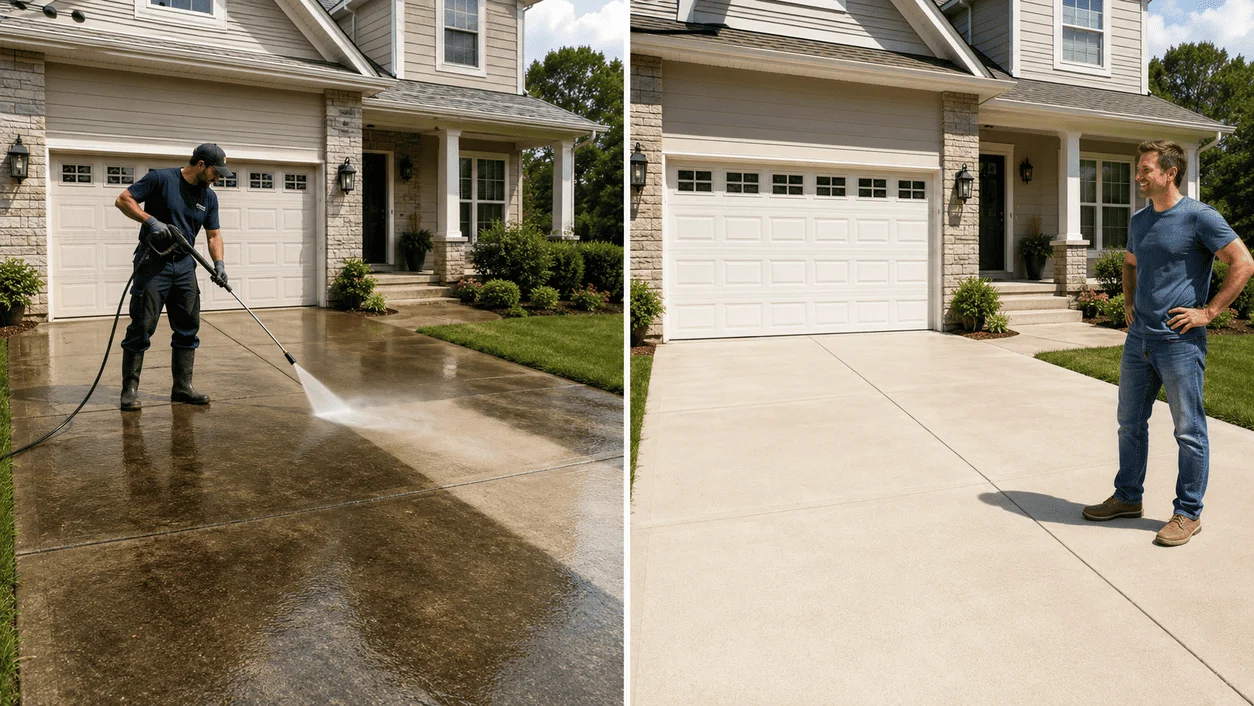
The Full Restoration
Clean. Re-Sand. Seal.
Three stages, in order, in the right weather. Skipping any one of them is why cheap paver jobs cloud, peel, or fade within a year.
Deep Clean
Hot and cold power washing matched to the surface lifts embedded grime, mold, and old stains out of the pavers – and we treat efflorescence (that white mineral haze) with a dedicated wash, because sealing over it locks the cloudiness in permanently.
Polymeric Re-Sand
Joints are refilled with polymeric sand, swept in, compacted, and activated. Once hardened, it locks the field together, stops washout, and closes the gaps where weeds root and ants excavate.
Seal & Cure
Once the surface is fully dry, we apply a professional-grade paver sealer in even coats – the class of solvent-based acrylics like Armor AR350 and AR500 – then the patio cures 24–48 hours before furniture goes back.
Your Choice Of Finish
Wet Look Or Natural?
Same protection, two different appearances. We show you both on your own pavers before you commit.
Wet Look / Enhanced
Deepens the color the way rain does and holds it there, with a satin sheen. This is the finish most Cambridge owners choose – it is the “day it was installed” look, restored.
Best for: patios and pool decks where the color palette is the point.
Natural / Matte
Full stain and sand-lock protection with no visible change in appearance. The pavers just look clean, permanently.
Best for: walkways, driveways, and homeowners who prefer the dry, natural tone.
Overdue?
Signs Your Pavers Need Attention
- The color only looks right when it rains. That temporary wet richness is what a wet-look sealer restores permanently – its absence means the old sealer is gone.
- Joint lines are emptying out. Sand washing onto the pool deck or lawn means the joints are open to weeds, ants, and shifting pavers.
- Weeds and ant hills in the gaps. Both are symptoms of failed joint sand, not causes – pulling weeds without re-sanding just reserves their spot.
- White haze or cloudy patches. Efflorescence or a failing previous sealer. Both are correctable, and both get worse if sealed over without treatment.
- Water soaks in flat instead of beading. The simplest test there is: if water does not bead, the protection is gone.
“Our pool patio looked ten years old after five summers. They cleaned, re-sanded, and sealed it in two days and the color is honestly better than I remembered it new.”
Answers
Brick Paver Washing & Sealing FAQs
Will pressure washing blast the sand out of my paver joints?
Not the way we do it. A rotary surface cleaner spreads the pressure evenly across the surface instead of concentrating it in the joint lines, the way a handheld wand does. And because every wash is followed by fresh polymeric sand, the joints finish fuller and harder than they started.
Do Cambridge pavers need to be sealed?
Yes. Sealing locks the joint sand in place, deepens and protects the color, and blocks oil, rust, and organic stains from soaking in. Unsealed pavers on Long Island typically fade and lose joint sand within a few seasons. A quality sealing lasts 3 to 5 years.
How often should pavers be sealed on Long Island?
Every 3 to 5 years for most patios and walkways, and closer to 3 for pool decks and driveways that see heavy sun, chlorine, or vehicle traffic. If water no longer beads on the surface, the old sealer has worn through.
What is polymeric sand and why does it matter?
Polymeric sand is joint sand mixed with binders that harden after watering. It locks pavers together, resists washout, and closes the gaps where weeds root and ants nest. Re-sanding before sealing is what separates a restoration from a rinse-and-spray job.
Can you fix hazy or white residue on pavers?
Usually yes. White haze is typically efflorescence – mineral salts rising out of the concrete – or a previous sealer applied over trapped moisture. Each needs a different correction, which is why we diagnose before we treat.
Wet look or natural finish – which should I choose?
Wet-look deepens the color and adds a satin sheen – the “just installed” look most Cambridge owners want back. Natural protects without changing appearance. We show you samples on your own pavers first.
Will sealing stop weeds and ants in the joints?
Sealing over fresh polymeric sand dramatically reduces both – hardened joints leave nowhere for seeds to root or ants to dig. Existing weeds are removed during the cleaning stage.
How long before we can use the patio?
Foot traffic after about 24 hours, furniture after 48. Pool decks and driveways get a full 72 hours before heavy use, weather depending.
My pavers are newly installed – when can they be sealed?
Wait 60 to 90 days so natural efflorescence can rise and be washed off first. Sealing too early traps those mineral salts under the coating and causes permanent clouding.
Why not just DIY with a sprayer from the box store?
The failure mode is not the spraying – it is the prep. Sealer applied over dirty pavers, damp joints, or old failing sealer will cloud, peel, or trap stains permanently. Professional restoration cleans, re-sands, dries, and seals in the right conditions.
How much does paver sealing cost on Long Island?
It depends on square footage, joint condition, and whether old sealer needs stripping. Every estimate is free and no-obligation, and we quote the full restoration – not a teaser price. Call (631) 620-2499.
Where We Work
Paver Restoration Across Long Island
Based in Holbrook and serving homeowners throughout Suffolk & Nassau:
Get The “Day It Was Installed” Look Back
Fall Special: 20% Off When You Call – Offer Expires 11/30/26
Free, no-obligation estimate – Mon–Sun, 10am–7pm.
Call Now & Save 20% (631) 620-2499